Why do I look fat in pictures
tl;dr
The scientific answer is focal length. The right answer is "No, you don't."
What makes us human is that we ask questions. Since November 2022, humanity has collectively asked trillions of questions to software. We've had AI assistants answer questions seemingly incorrectly, often at the behest of the human asking. We call these "hallucinations."
But what is truly the "correct" answer to a question? My aunt and a simple photo threw a lot of wisdom on the subject.
The Technical Truth
The scientific answer to "Why do I look fat in pictures?" is usually focal length.
Wide-angle lenses (like the one on your phone) let you fit more into the frame from up close. But the closer you are to any camera, the more exaggerated the nearest features become. Your nose, chin, or cheeks will look proportionally larger. It's not the lens distorting you. It's the distance.
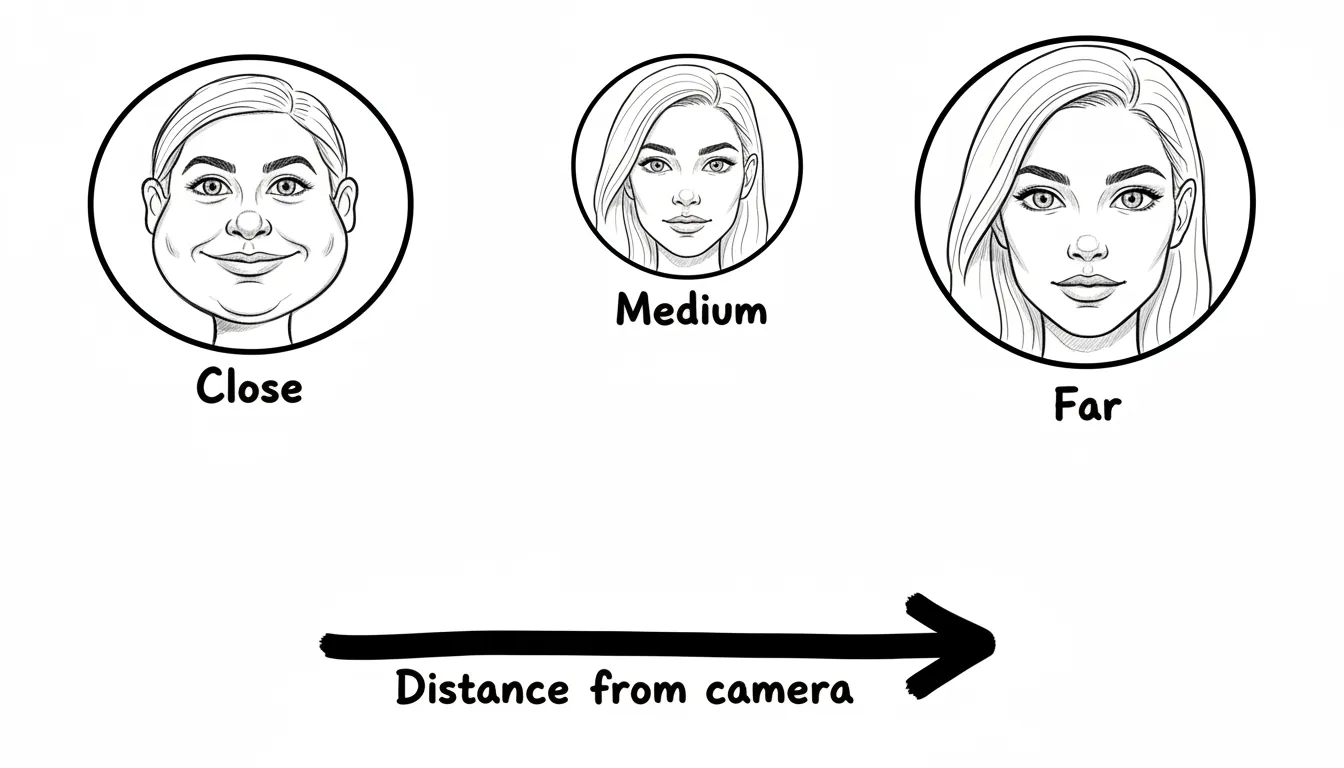
Stand further away, or use your phone's 2x zoom which mimics a longer focal length, and the effect disappears. Professional portrait photographers use longer focal lengths for exactly this reason. They compress perspective, flatten features, and create a more accurate representation of how we actually look.
So yes, technically, the camera can add ten pounds. It's not in your head.
The Human Hallucination
When my aunt asked me why she looked fat in a photo I'd shared with her, I gave her the answer above. I explained the physics of light and lenses.
I gave her the perfectly accurate, zero-hallucination response.
She replied: "All I wanted to hear was 'No, you don't.' You failed."
She was right. The correct answer wasn't about focal lengths. It was: "You look great. The camera doesn't do you justice."
In the world of AI, we treat hallucinations as bugs—errors to be stamped out in pursuit of cold, hard facts. But in the world of humans, sometimes the "hallucination"—the emotionally calibrated, context-aware softening of reality—is the only answer that's actually true.